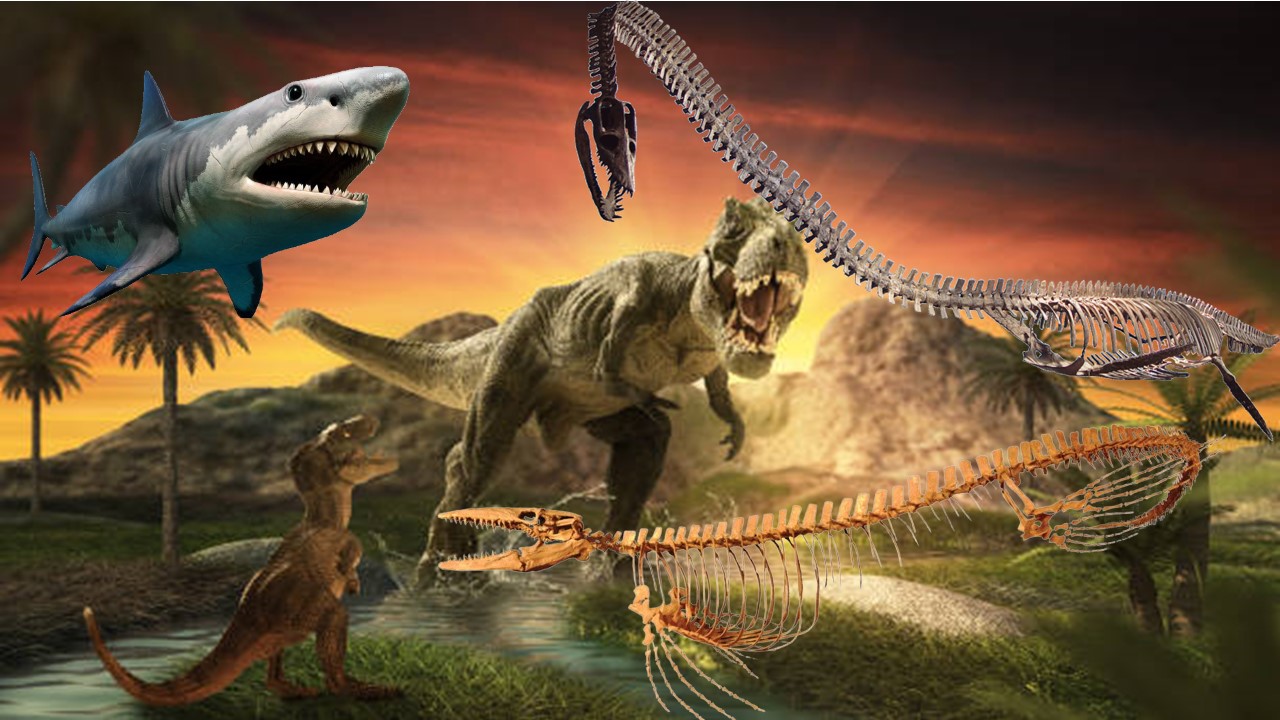
The Late Cretaceous is the latter division of the Cretaceous Period, spanning from approximately 100.5 million to 66 million years ago. It marks the final chapter of the Mesozoic Era and was a time of significant geological, climatic, and biological changes. Key features of this epoch include:
Breakup of Pangaea: The continents were continuing to drift apart, forming more distinct landmasses.
Seas and Oceanic Expansion: High global sea levels led to the formation of shallow inland seas, such as the Western Interior Seaway in North America.
Mountain Formation: The Laramide Orogeny, responsible for creating the modern Rocky Mountains, began during this time.
2. Climate
The Late Cretaceous climate was generally warm and humid, with minimal polar ice caps.
High levels of atmospheric carbon dioxide contributed to a “greenhouse world.”
Tropical and subtropical climates were widespread, and forests extended into polar regions.
3. Flora
Angiosperms (flowering plants) became more dominant and diversified significantly. Conifers, ferns, and cycads also remained important components of the landscape.
4. Fauna
Dinosaurs: The Late Cretaceous is famous for its diverse and iconic dinosaur fauna, including:
Tyrannosaurus rex, Triceratops, and other ceratopsians.
Duck-billed hadrosaurs like Edmontosaurus.
Carnivores like Velociraptor and Giganotosaurus.
Titanosaurs (massive sauropods) in South America and Africa.
Marine Life:
Marine reptiles like Mosasaurus and Elasmosaurus dominated the oceans.
Ammonites and rudists were common in marine environments.
Avian Dinosaurs and Birds: Early birds and feathered dinosaurs proliferated.
Mammals: Small, nocturnal mammals continued to evolve, paving the way for post-Cretaceous diversification.
5. Mass Extinction
The Late Cretaceous ended with the Cretaceous-Paleogene (K-Pg) extinction event around 66 million years ago.
A combination of a massive asteroid impact (Chicxulub Crater) and volcanic activity (Deccan Traps) likely caused widespread environmental upheaval, leading to the extinction of about 75% of species, including all non-avian dinosaurs.
Used to monitor number of Google Analytics server requests when using Google Tag Manager
1 minute
_gid
ID used to identify users for 24 hours after last activity
24 hours
_gac_
Contains information related to marketing campaigns of the user. These are shared with Google AdWords / Google Ads when the Google Ads and Google Analytics accounts are linked together.
90 days
_gali
Used by Google Analytics to determine which links on a page are being clicked
30 seconds
_ga
ID used to identify users
2 years
__utmx
Used to determine whether a user is included in an A / B or Multivariate test.
18 months
__utmv
Contains custom information set by the web developer via the _setCustomVar method in Google Analytics. This cookie is updated every time new data is sent to the Google Analytics server.
2 years after last activity
__utmz
Contains information about the traffic source or campaign that directed user to the website. The cookie is set when the GA.js javascript is loaded and updated when data is sent to the Google Anaytics server
6 months after last activity
__utmc
Used only with old Urchin versions of Google Analytics and not with GA.js. Was used to distinguish between new sessions and visits at the end of a session.
End of session (browser)
__utmb
Used to distinguish new sessions and visits. This cookie is set when the GA.js javascript library is loaded and there is no existing __utmb cookie. The cookie is updated every time data is sent to the Google Analytics server.
30 minutes after last activity
__utmt
Used to monitor number of Google Analytics server requests
10 minutes
__utma
ID used to identify users and sessions
2 years after last activity
SourceBuster is used by WooCommerce for order attribution based on user source.
Name
Description
Duration
sbjs_migrations
Technical data to help with migrations between different versions of the tracking feature
session
sbjs_current_add
Timestamp, referring URL, and entry page for your visitor’s current visit to your store
session
sbjs_first_add
Timestamp, referring URL, and entry page for your visitor’s first visit to your store (only applicable if the visitor returns before the session expires)
session
sbjs_current
Traffic origin information for the visitor’s current visit to your store
session
sbjs_first
Traffic origin information for the visitor’s first visit to your store (only applicable if the visitor returns before the session expires)
session
sbjs_udata
Information about the visitor’s user agent, such as IP, the browser, and the device type
session
sbjs_session
The number of page views in this session and the current page path
30 minutes
Marketing cookies are used to follow visitors to websites. The intention is to show ads that are relevant and engaging to the individual user.
Facebook Pixel is a web analytics service that tracks and reports website traffic.